
One of our clients at Teqnius, with a presence in over 20 countries across MENA and APAC, needed a scalable, efficient, and user-friendly ecommerce solution to optimize their existing WooCommerce and WordPress setup.
We crafted a solution that addressed their need to accommodate varied administrative, pricing, marketing, and inventory requirements for each country, alongside integrating API capabilities for seamless mobile app integration. Here’s how we approached it.
Crafting a Domain Name Strategy
When building an ecommerce presence across multiple countries, choosing the right domain structure is crucial. For this client, we had to decide between country-specific domains (e.g., shop.ae) or subdirectories (e.g., shop.com/ae).
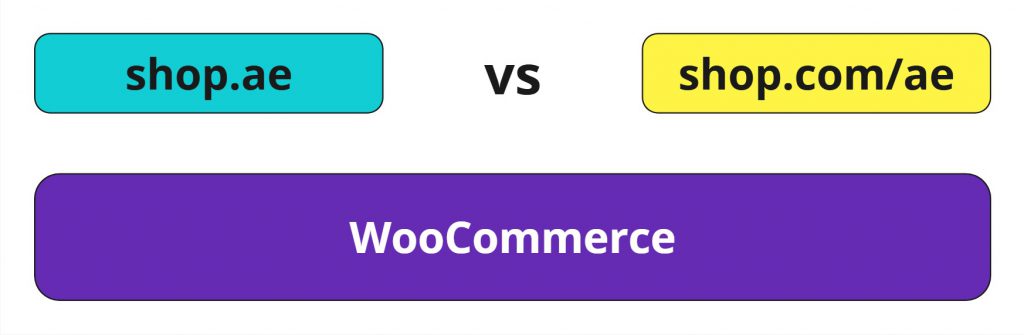
Subdirectories emerged as the preferred choice. This approach allows the brand to consolidate domain authority, which is beneficial for SEO, while also simplifying technical maintenance.
To ensure a localized and seamless user experience, we implemented region-specific content and enabled automatic geolocation-based redirection to the appropriate subdirectory.
WooCommerce Architecture for Multi-Country Ecommerce
The client was already using WooCommerce, but expanding it to serve 20 countries required a rethinking on how it is setup and configured.
The setup revolved around three options: a single WooCommerce installation, multiple independent installations, or a WordPress Multisite configuration.
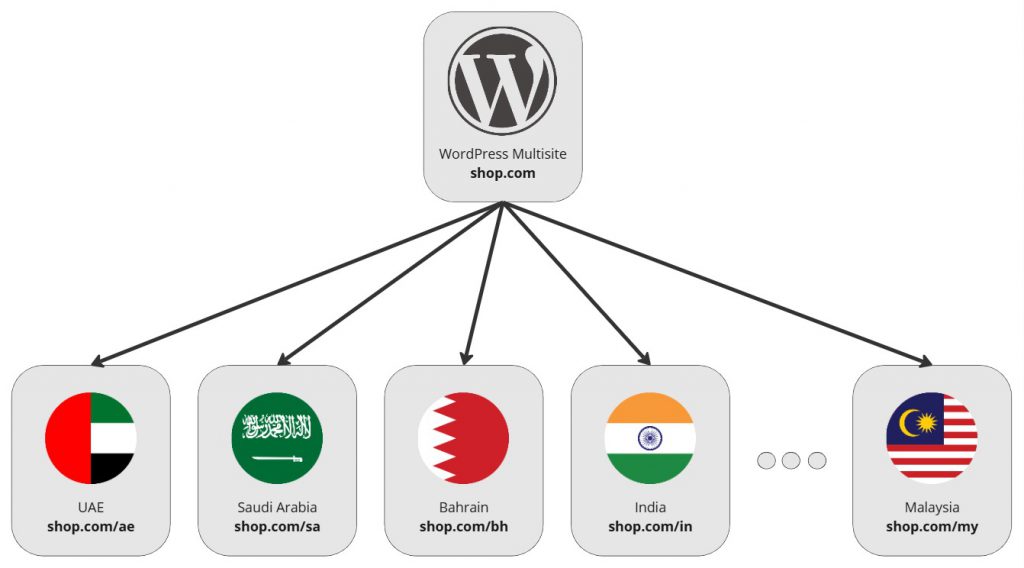
We chose WordPress Multisite. This architecture allowed us to:
- Maintain independent sites for each country, enabling distinct pricing, inventory, and localized content.
- Manage plugins, themes, and global settings from a centralized backend, streamlining updates and reducing technical overhead.
- Customize tax rules, payment gateways, and shipping methods to meet the unique requirements of each country.
Integrating API for Mobile App Support
To complement the web platform, the client required APIs to support a mobile app that would enable seamless data consumption and real-time updates. We utilized the native REST APIs provided by WordPress and WooCommerce, ensuring seamless integration and consistent functionality. This API integration provided:
- Product Synchronization: Ensuring product listings, stock levels, and pricing remain consistent across the app and web platform.
- Order Management: Enabling customers to place and track orders directly from the app while syncing with the WooCommerce backend.
- User Authentication: Allowing secure login and profile management through the app.
- Region-Specific Customization: Delivering localized app experiences with country-specific content and settings.
Final Thoughts
Creating a platform for multi-country ecommerce is no small task, but with the right tools, it becomes a manageable challenge. By combining WordPress Multisite and WooCommerce, we built a system that simplifies operations while allowing local customization. The integration of WordPress and WooCommerce’s native REST APIs ensures smooth communication between the web platform and mobile app, delivering a seamless user experience.
This solution is designed to adapt and grow as the business expands, balancing global control with regional flexibility. It enables consistent branding, efficient management, and reliable functionality, making it a strong foundation for scaling ecommerce across borders.
Do you have ideas or experiences with multi-country ecommerce platforms? If there’s something you’d do differently or a better approach you’ve tried, I’m all ears—let’s discuss!